Showing posts with label Diwali. Show all posts

20 July, 2016

Raksha Bandhan special Simple Mehndi designs


Stylish Mehndi Designs For Raksha Bandhan – Raksha Bandhan Henna Designs

Raksha Bandhan is a popular Indian festival when majority of women & girls wear Mehndi on their hands, palms especially to show their love and emotions for their brothers. If you are looking for some stylish Mehndi designs for Raksha Bandhan then you are right place.

Raksha Bandhan Mehndi Designs

Raksha Bandhan Mehndi designs are primarily worn on palms and sometimes on full hands. Here are some stylish Raksha Bandhan Henna design ideas.


26 February, 2014

Beautiful ideas to make your day more Special.


Hello Friends,

As we know special days keeps special value in our life and we try to do something different to make our family members , parents,our life partner in different ways.

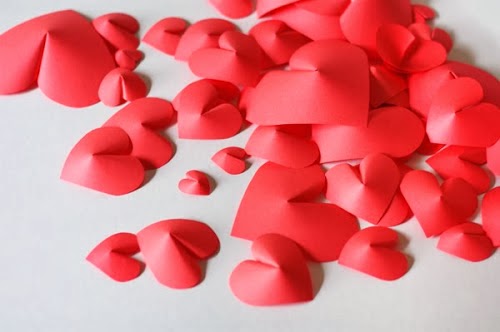
So friends to make your Anniversary ,birthdays, our valentines day any other Day so special i will help you all to make beautiful and special for your loved ones.These creative ideas can help you to decorate your room more beautifully to attract your loved ones and to give him lovely surprise to make special day

  ROOM DECORATION FOR YOUR LOVED ONES


                    HEART RING FOR YOUR PARTNER


29 October, 2013

Diwali best Laxmi Poojan Time

Choghadiya Table

Day Choghadiya
3rd
November 2013
(Sunday)
Night Choghadiya
Udveg 06:38:24-07:59:55                                           
Shubh -17:30:30 - 19:09:05
Chal -07:59:55 - 09:21:25
Amrit -19:09:05 - 20:47:39

Labh -09:21:25 - 10:42:56
Chal -20:47:39 -22:26:14                                                         
Amrit -10:42:56 - 12:04:27
Rog -22:26:14 - 24:04:49+
Kaal -12:04:27 - 13:25:58
Kaal -24:04:49+ -25:43:24+
Shubh -13:25:58 - 14:47:28
Labh -25:43:24+ -27:21:59+
Rog -14:47:28 - 16:08:59
Udveg-27:21:59+ -29:00:34+
Udveg -16:08:59 - 17:30:30
Shubh-29:00:34+ -30:39:09+

About Choghadiya Table
Choghadiya or Chogadia is used for checking auspicious time to start new work. Traditionally Choghadiya is used for travel muhurthas but due to its simplicity it is used for any muhurtha.
There are four good Choghadiya,Amrit,Shubh,LabhandChal, to start auspicious work.

Three bad Choghadiya,Rog,Kaaland Udveg, should be avoided.

The time between sunrise and sunset is called day Choghadiya and the time between sunset and next day sunrise is called night Choghadiya.


27 October, 2013

Mandna for diwali to decorate your chock of House


   Mandana is a traditional form of rangoli . In olden days when in village festival comes they use to decorate their house by cow dung cake . when it got dry they use to make designs with white and red color which looks so beautiful .How people use to make those designs with the help of oil paints in the house so that it can be for long time.


Laxmi Mata Calender for Diwali poojan


      As we know diwali is comming . And in every house on this day we use to worship Mata Laxmi. So as per requirement here  i am providing Mata Laxmi photo & Laxmi ji Aarti.

Those don't have Please download or save image .


22 October, 2013

Diwali lakshmi Mata Aarati


Mahalakshmi Aarati(with Pooja Thali and do aarati)
 
Om Jai Laxmi Mata, Maiya Jai Laxmi Mata,
Tumko nis din sevat, Hari, Vishnu Data........... Om Jai Laxmi Mata
Uma Rama Brahmaani, Tum ho Jag Mata..............Maiya, Tum ho Jag Mata,
Surya ChanraMa dhyaavat, Naarad Rishi gaata...............Om Jai Laxmi Mata.
Durga Roop Niranjani, Sukh Sampati Data, ...........Maiya Sukh Sampati Data
Jo koyee tumko dhyaataa, Ridhee Sidhee dhan paataa................Om Jai Laxmi Mata.
Jis ghar mein tu rehtee, sab sukh guna aataa,.............Maiya sab sukh guna aataa,
Taap paap mit jaataa, Man naheen ghabraataa..............Om Jai Laxmi Mata
Dhoop Deep phal meva, Ma sweekaar karo,.......................Maiya Ma sweekaar karo,
Gyaan prakaash karo Ma, Moha agyaan haro...................Om Jai Laxmi Mata.
Maha Laxmiji ki Aarti, nis din jo gaavey...............Maiya nis din jo gaavey,
Dukh jaavey, sukh aavey, Ati aananda paavey...............Om Jai Laxmi Mata.

Simple Diwali poojan vidhi

Simple Deepawali Lakshmi Puja

1.Face East
2.Place peetham in front of you, and spread red cloth or unused small towel on top
3.Place Goddess Lakshmi’s pictureon top of the red cloth.
4.Put oil Diye on both side
5.Put Aggarbatti on the right hand side of the picture
6.Prepare a plate with kumkum, chandan,turmeric power, coins, betel nuts, and leaves.
7.Place banana on side
8.Place Prasad on side
9.Take 1 cup of raw rice, mix couple of pinches of turmeric powder, mix it really well 
and sprinkle couple of water drops and mix it again this is called akshata.
10.Place flowers on your right hand side and put akshata (prepared above) in the same plate
11.Keep water filled kalasha ready to your left
12.Place panchapatram or a cup filled with water and spoon in your front
13.Place paper napkins on side
14.Keep ganesha idol, lakshmi idol, lakshmi coins right in front of the picture
15.Your wife will sit on your right for the puja
16.Take bath and wear new clothes and do namaskar to your parents, guruor 
their picture and startpuja.
17.The puja described here is very simple, if you knowadditional mantras or wants to 
play CD or tape later on, please feel free to do that.


Diwali beautiful, simple Rangoli designs

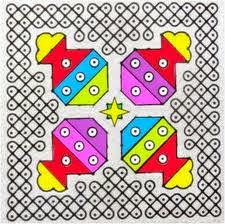
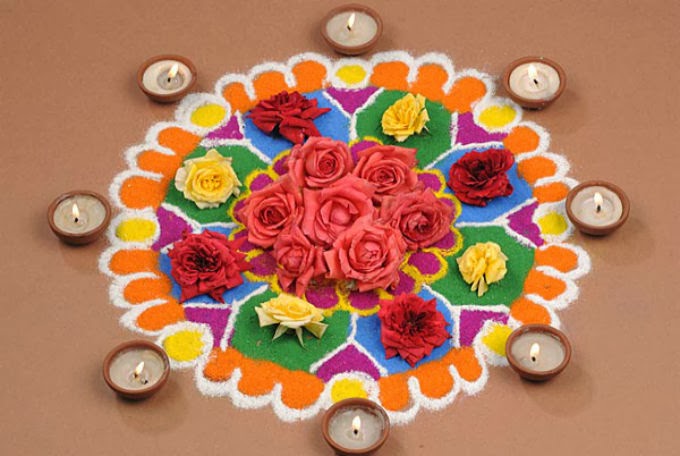
        Different types of rangoli designs as per public requirments. Doted rangoli designs, Diya with flowers rangoli, colourfull rangoli, and many more types of designs which are used to decorate our house on different occasions.May this diwali bring sucess and prosperous to your life.


Diwali Poojan Samgri (Items)

Simple Dipawali Lakshmi Puja
Puja Items (all items available in local grocery stores)

Kumkum Powder  1 spoon 
Turmeric Haldi1 spoon
Chandan Powder1 spoon
Agarbatti /Dhoopsticks
4 aggarbatti sticks
Flowers
Camphor Dhoop
patra
Oil lamp(if available)
Kalash
Ghee Diya
Panchpatra
Achman
Puja Plate
Camphor 1 pkt
Peetham(optional)
Raw Rice1 cup
Milk 1 cup
Curd 1 cup
Ghee 1 cup
Honey 2 spoon
Sugar 1 cup
Paper roll
Ganesha Idol
Mahalakshmi Idol or picture
Lakshmi coins
Cotton 
Betel nuts 1 paket
Betelleaves(5)
Red or white cloth(towel or blousepiece)
Home cooked prasad (Sweet)
sweets
Banana 1 dozen

What Diwali means For Indians?

           Diwali is a national Hindu festival that is also embraced by other religious denominations including the Sikhs and Jains. As such, it entails religious and regional variations in the way it is celebrated. For Jains, Diwali signifies the attainment of moksha (liberation from the cycle of life and death) by Mahavira (the 6th century BC founder of Jainism’s central tenets). For Sikhs, Diwali largely denotes the 1619 release of Guru Hargobind (the sixth of Sikhism’s 10 gurus), along with 52 others, who had been detained in the Gwalior Fort by the Mughal emperor Jehangir.

          When it comes to India’s major religious community, the Hindus, Diwali commemorates the victory of Lord Rama (King of Ayodhya, according to sacred Hindu texts, and also a prominent deity) over Ravana (a powerful demon) and his triumphant return to the kingdom after a period of exile. Keen to make Lord Rama’s homecoming as swift and safe as possible, his jubilant subjects illuminated the way with masses of twinkling diyas (earthenware oil lamps). It is for this reason the lighting of diyas has become a key component of the Diwali festival.

          It also symbolises the replacement of darkness (ignorance) with ‘inner’ light – garnered via the pursuit of knowledge and spiritual practices. Indeed, spirituality lies at the heart of Diwali, with devotees specifically seeking blessings from two prominent Hindu deities: Lakshmi, the goddess of wealth and Ganesh, the elephant-headed god of good fortune and auspicious beginnings. Worshippers pray for prosperity and well-being for the year that lies ahead, with fireworks and crackers proffering plenty of raucous razzle-dazzle when devotional formalities come to a close.
While the festival undeniably takes centre stage, there is a particularly distinct air of ebullience – and fervent preparation – in the lead up to Diwali. Houses and shops are given a rigorous spring clean before being lovingly decorated with fairy lights, patterned lanterns and colourful rangolis/kolams (propitious rice-paste/powder/chalk designs adorning thresholds). The streets teem with shoppers keenly stocking up on everything from fancy new clothes and festive household decorations, to gifts for family, friends and business acquaintances.

      The most popular gift, by a long shot, is mithai (Indian sweets), with ornately packaged dried fruits and nuts also a hot seller. Shops are filled with a spectacular array of mithai specially prepared for this festival, from thickly cut squares of barfi (fudgelike sweet, often coated with a thin film of edible silver leaf) – old favourites include pista (ground pistachio nut) and kaaju (cashewnut) – to soft syrupy gulab jamuns (deep-fried balls of dough) and spongy rasgullas (sweetened cream-cheese balls flavoured with rose-water). Indeed, if there’s ever a time to experience India at its sweet – and convivial – best, it’s during Diwali.

Diwali special Unique Mehndi Designs


Diwali Festival of lights, Lots of celebration crakers, sweets decoration cleaning etc etc.    Diwali means lots of planning to give our home a make over.
       A star attraction on the Indian festival stage is Diwali – a joyous celebration that, broadly speaking, celebrates the triumph of good over evil. The festival’s name roughly translates to ‘row of lamps/lights’ – which is why Diwali is widely known as the Festival of Lights.
           It takes place over a period of five days on auspicious dates during the end of Ashvin/start of Kartika – the Hindu lunar calendar months which equate to the Gregorian calendar months of October/November.


CONTACT US

Name

Email *

Message *